Life beneath the surface

Life beneath the surface
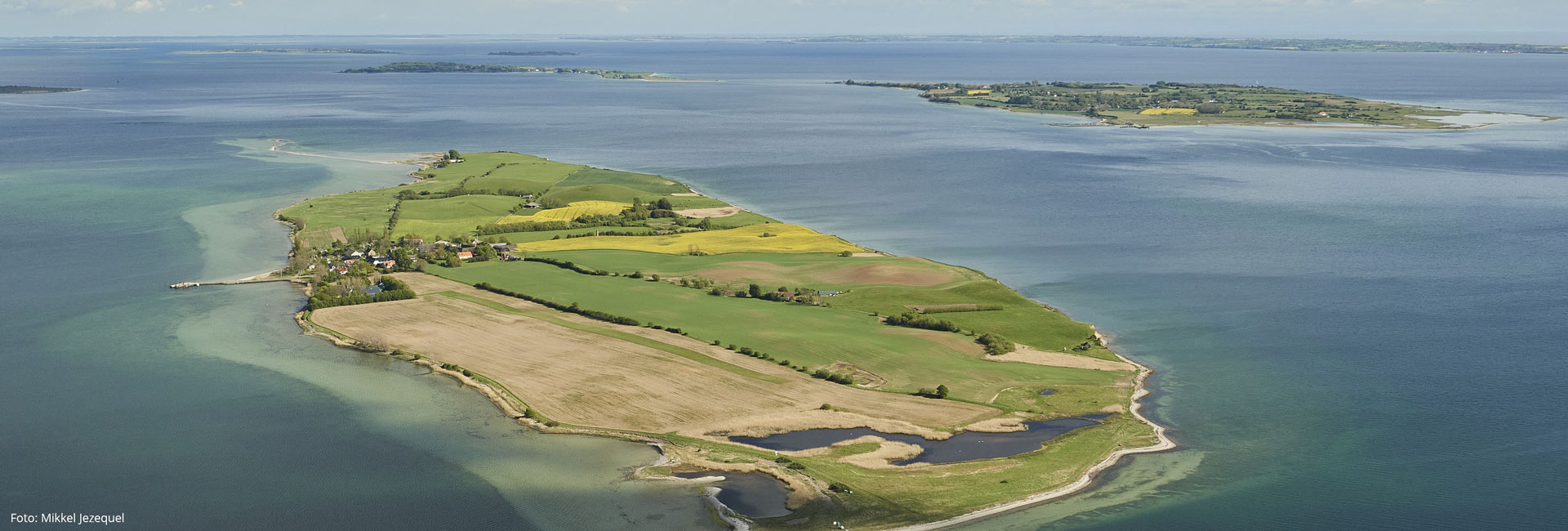
In the South Fyn Archipelago, UNESCO Global Geopark The South Fyn Archipelago and WWF Denmark are working together to bring life back beneath the surface.
With a historic grant of DKK 150 million from The A.P. Møller Foundation, we will launch habitat and ecosystem restoration efforts through 2033 as part of the largest holistic marine nature restoration project in Danish history.
The project serves as a catalyst for the iconic archipelago, with large-scale initiatives focused on eelgrass, stone reefs, mussel beds, and the area’s species. At the same time, the project will engage and involve local communities and other stakeholders to bring life below and above the sea surface closer together.
“Life Beneath the Surface” is carried out in collaboration with the four South Fyn municipalities of Svendborg, Faaborg-Midtfyn, Langeland, and Ærø, as well as leading Danish researchers from the Center for Marine Nature Restoration, the University of Southern Denmark, Aarhus University, and DTU Aqua.
Efforts for life beneath the surface

Eelgrass
Historically, eelgrass has been widespread in the archipelago, but in many areas the eelgrass meadows have declined significantly, reducing both biodiversity and the resilience of the ecosystem. Therefore, small-scale pilot plantings of eelgrass are carried out to identify the most suitable areas before larger-scale restoration is implemented.

Stone reefs
Historically, extensive stone fishing in the South Fyn Archipelago has removed large parts of the natural stone reefs, and with them some of the sea’s most important habitats. The project therefore works on establishing stone reefs at at least five suitable locations, where a total of around 75,000 tonnes of stone will be deployed. The reefs will also serve as potential coastal protection.

Biogenic reefs
In the South Fyn Archipelago, we will establish biogenic reefs in the form of blue mussel beds, as they create complex habitats where sessile organisms can settle and where various animal species – including several of the archipelago’s bird species – can find food.
The reefs also filter the water and thereby contribute to improved water quality.

Species
In addition to restoring habitats, the project will also focus on targeted efforts for one or more species that play a key role in the archipelago’s ecosystem and/or are characteristic of the area.
This may include harbour porpoise, turbot, cod, white-tailed eagle, or other seabirds, where improved marine habitats can help strengthen populations.
The South Fyn Archipelago through time
Year after year, the South Fyn Archipelago is affected by severe oxygen depletion caused by nitrogen runoff from land. However, overfishing and extensive stone fishing have also led to a situation where nature in the archipelago is in crisis.
Yet, there is hope.
In 2025, the Danish Parliament adopted a ban on bottom trawling in the Belt Sea, and at the same time, the Green Tripartite Agreement includes plans to reduce agricultural nitrogen emissions to the South Fyn Archipelago by 40 percent. There are also strong conditions in place for establishing stone reefs, eelgrass, and biogenic reefs in the area.
Finally, Geopark The South Fyn Archipelago has been designated a UNESCO Global Geopark and is therefore recognised both internationally and nationally as an area of outstanding geological, biological, and cultural significance.

